
"Songs by Jackie Paris"
A Guest Post by Rob Isaiah
Songs by Jackie Paris, as transferred by Rob Isaiah, on youtube.com:
https://www.youtube.com/playlist?list=PLdLcEHLTPS-Pd6im3Fy1S1SB1BoILffrQ
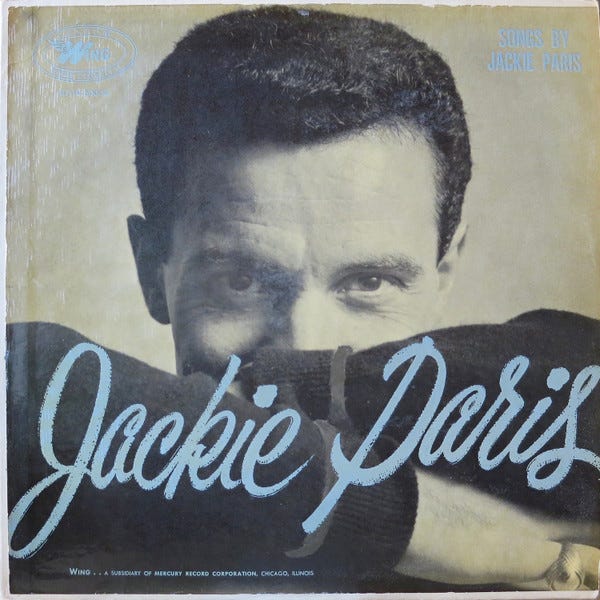
Wherever I am, practically every time I play a Jackie Paris album, whoever is passing my direction stops right there and asks, “Who is that?” Then, of course, there comes the inevitable comment, “Is that Sinatra? No, it can’t be.”
When I first really started getting into the vocal jazz genre in my late teens and early 20s, I overloaded myself out of sheer excitement and reckless ambition with so many wonderful jazz singers of the 1950s, discovering record after record as one would buried treasure. Some were great records; on other rare occasions, a select few may not have been so memorable. However, the moment I first heard Jackie Paris, I was drawn to his voice. There is a quality to it that’s forever young and folksy in nature. No, I’m not talking about ‘60s Greenwich Village Folk, but rather something more folklore-like.
At first, I could picture him as a sort of fictional character in the deep woods somewhere, like a “Nature Boy” type or a faun, if that makes any sense, singing in the middle of an enchanted forest. Then, as if Jackie Paris were aware I might figure him out, he shapeshifted, becoming the voice of “1950s teen angst.” I thought, “Oh, he’s a teen idol of sorts—the innocently mischievous type who’s searching for love and hoping the spring will bring it to him in time for summer, with the promise that love will never end and the summer will go on forever.”
Yet again, once I thought I had finally figured him out, he changed, and out came this sage of a jazz figure—not like some old monk with a long white beard, but like your older brother who left home at a young age, went out and saw the world, grew up, learned a thing or two, and is now coming back to give you, the younger sibling, a bit of wisdom, still possessing a sense of eternal youth that seems to elude others.
I have spent the past ten plus years, after hearing Jackie Paris for the first time, trying to find the proper word to describe him in my own personal way. I watched the documentary, ’Tis Autumn: The Search for Jackie Paris (by Raymond De Felitta, and featuring onscreen commentary from Will Friedwald, the great sloucher himself) and even now, as I am writing this, just when I thought I had finally figured him out, he slips from my grasp—almost like trying to capture Peter Pan’s shadow. The beauty of Jackie’s artistry is his undefinability. I guess, in some ways, he can be kind of a Peter Pan of jazz—eternally youthful in spirit and voice—or he could be a “Nature Boy” of jazz, or a “Happy Wanderer,” someone who made his own rules in life.
I could think of a hundred reasons why I love this album: the music, the arrangements, the choice of material, the musicians who played on it. But in the end, it all circles back to Jackie Paris himself. One of the things I marveled at was how well Jackie could instantly shift moods, one different song after another, still never losing the listener. He starts off the album as the typical 1940s big band “boy singer” with “There Will Never Be Another You,” accompanied by what I still think is probably the tightest-sounding sax section ever recorded, comprised of jazz greats: Sam Marowitz and Hal McKusick on altos, Frankie Socolow and Ed Wasserman on tenors and Al Epstein on baritone. Jackie’s sense of swing and time are so crisp; he sings behind the beat in all the right places, stretches notes, bends them playfully, and then sings on the beat in certain spots as if to remind the listener that he’s no Eddie Fisher! It’s worth noting that there was one other song recorded for “Sax Section” Session that didn’t make it onto the LP release, “My Kinda Love”, which still has yet to make its debut from the vault.


Just when you think you know what direction the record’s going to take, suddenly it shifts. He delivers a ballad, “Heaven Can Wait,” with a sense of sentimentality that is heartfelt and not at all syrupy or synthetic, but totally honest and believable. The bulk of this album’s musical personnel includes a five-piece string section, a swinging rhythm section; Bill Triglia on piano, Barry Galbraith on guitar, Milt Hinton on bass and Osie Johnson on drums, Janet Putnam on harp, and one musician whom I must highlight: Romeo Penque, who plays a myriad of reed instruments. How many woodwind players have you met who are able to play a flute, oboe, English horn, clarinet, and a contrabass clarinet? Exactly my point!
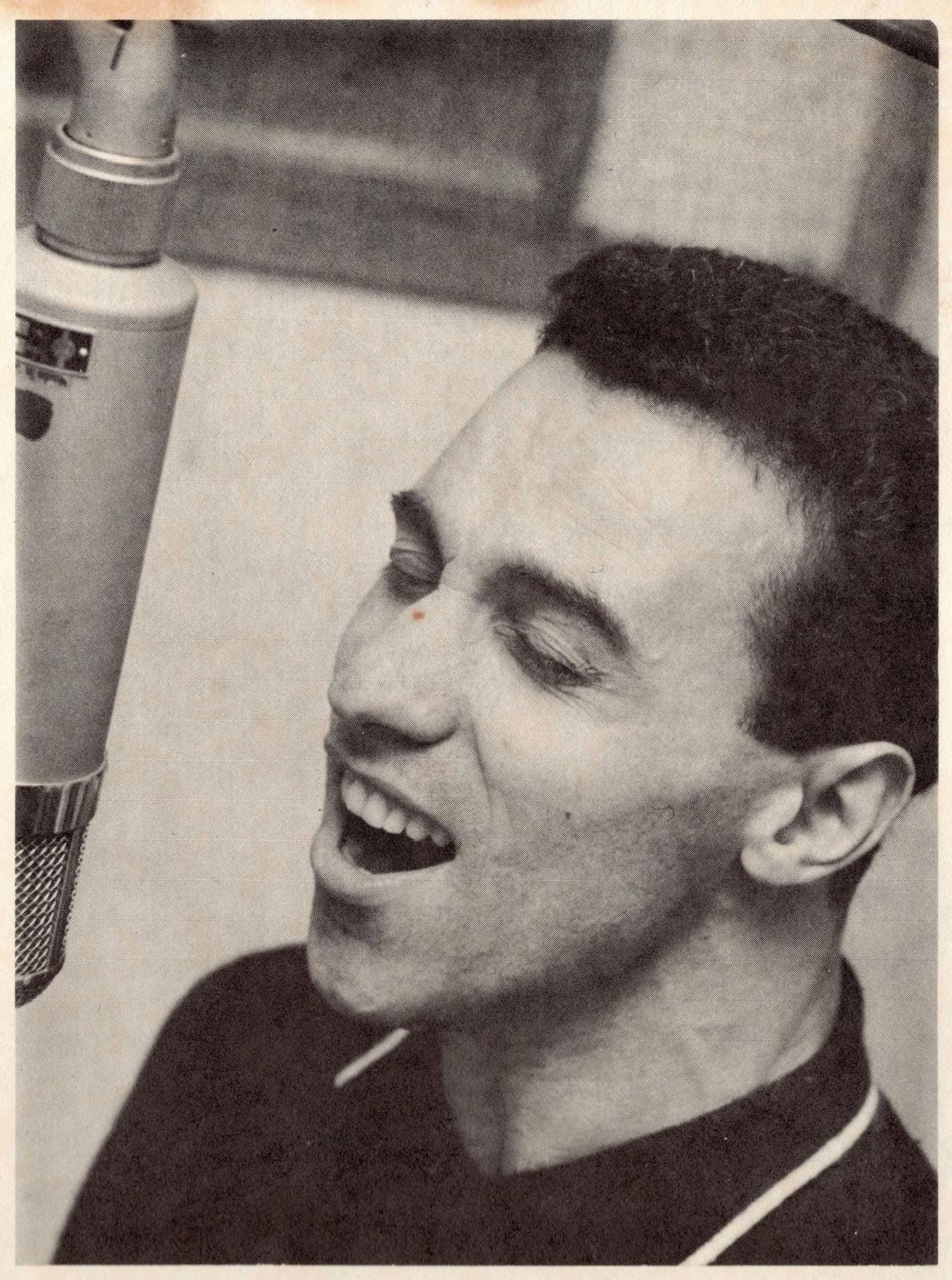
The reason why I point out the musical nature of this album is mainly to emphasize the creativity of its arranger, Manny Albam. It’s common for most arrangers who are given a ballad-heavy album, with the bulk of the sessions having strings, to resort to simply writing basic ballad charts with lovely string parts—which, by the way, I find nothing wrong with. But Manny Albam took it a step further. First, he got Romeo Penque to play different reed instruments to add more color and texture to the arrangements, and second, he wrote some of the charts in more of a Latin-styled rhythm. This was no random act, but an homage of sorts to his Hispanic heritage, as Manny Albam was a native of the Dominican Republic.
Looking back, I think I loved this album from the very beginning because it wasn’t full of the usual suspects. The set list wasn’t the typical jazz standards of the time, but rather songs I either rarely heard recorded by a lot of artists or was hearing for the first time. At the end of this, everything circles back to Jackie Paris. Considering all of the wonderful contributions by the great musicians on this album, the one thing that stays embedded in the mind is that voice.
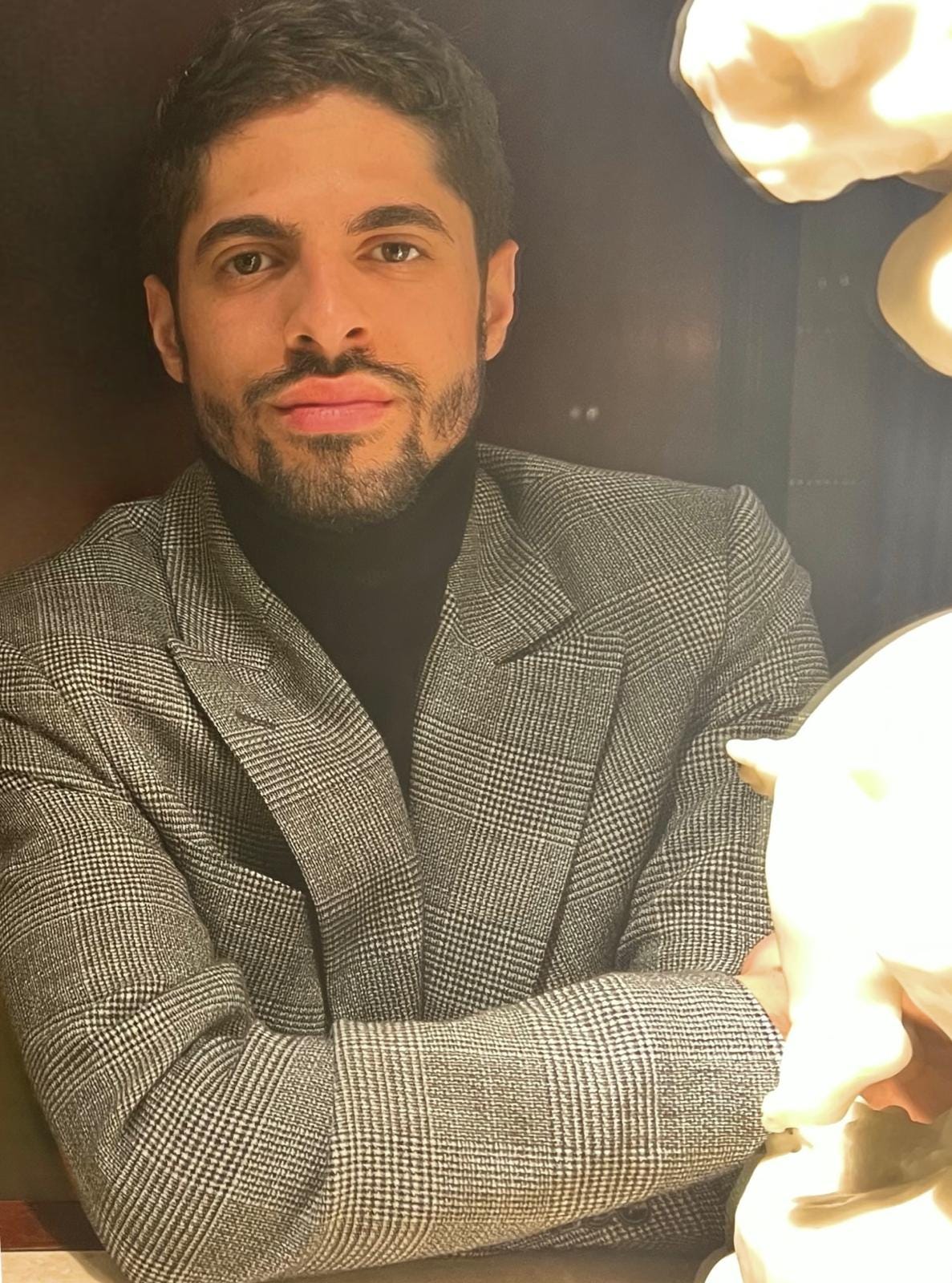
Robert Isaiah is a 31-year-old musician, arranger, singer, scholar, collector, historian, and engineer, who specializes in hi-fi transfers of classic jazz and vocal albums. Uncle Wilsci adds only the point that this album is a veritable Fisher Family songbook, with three songs by Marvin Fisher (“Strange,” “Heart of Gold”—dig the bass clarinet on that one!—and “Cloudy Morning”) and two by his sister Doris (“That Ole Devil Called Love” and “Whispering Grass”), the latter of which is co-credited to their father, the veteran songwriter Fred Fisher (best known for “Chicago”).
PS: For more informative reading about the late, great Jackie Paris, the reader is referred to this excellent and well-researched post by Leif Bo Petersen, courtesy of our great pal Lewis Porter and his invaluable Playback.
Thanks as always to Team Slouching: Rob “On the Job” Lester, Elizabeth Zimmer, Dan Fortune, Daniel Weinstein, Nick Rossi, Jeff Leibowitz, and Dan Levinson!
Jazz at Lincoln Center Swing University:
A Special video Session: Sinatra in the Sixties (click to view)
With Seton Hawkins & Will Friedwald (Thursday April 2, 2026)
Coming Very Soon—Your Next Favorite Substack: “The Adventures of Bill Boggs.” Yes! (Watch this space for details!)
(Very special thanks to Elizabeth Zimmer, Rob Lester, & Dan Fortune for their expert proofing, hey!) Special Thanks again to Daniel Weinstein, Jordan Taylor, & Rob Waldman.)
Sing! Sing! Sing! : My tagline is, “Celebrating the great jazz—and jazz-adjacent—singers, as well as the composers, lyricists, arrangers, soloists, and sidemen who help to make them great.”
A production of KSDS heard Saturdays at 10:00 AM Pacific; 1:00 PM Eastern.
To listen to KSDS via the internet (current and recent shows are available for streaming) click here. Here is the running list of recent shows.
The whole series is also listenable on Podbean.com; click here.
SING! SING! SING!
Bing Crosby Birthday Special—Ultimate Broadway Songbook
(SSS #199 2026-05-16)
Listen: + Playlist:
The Sacred Music of Duke Ellington—Then and Now
(SSS #198 2026-05-09)
Listen: + Playlist:
TONY BENNETT REMEMBERED ON NY1
a video interview with Stephanie Simon and Will Friedwald 2023-07-23
Click Here
Cinco de Mayo:
The Ernesto Lecuona (and Margarita Lecuona) Songbook
(SSS #197 2026-05-02)
Listen: + Playlist:
Ella Fitzgerald Sings the Jimmy Van Heusen, Sammy Cahn, Johnny Burke, & Jule Styne Songbook(s) (SSS #196 2026-04-25)
Listen: + Playlist:
The Mary Lou Williams Songbook with Dr. Michael Garber
(SSS #195 2026-04-18)
Listen: + Playlist:
April in My Heart: Songs About April
(SSS #194 2026-04-11)
Listen: + Playlist:
April Fool’s Day Special: Classic Parodies with Spike Jones & Co.
(SSS #193 2026-04-04) - 3/31/26, 3.49 PM
Listen: + Playlist:
THE NAT KING COLE BIRTHDAY SPECIAL:
The Nat Pack (All The King’s Men) 2 (SSS #192 2026-03-28)
Listen: + Playlist:
The Nat Pack (All The King’s Men) 1 (SSS #191 2026-03-21)
Listen: + Playlist:
The Irene Higginbotham Songbook (Women’s History Month)
{with special guest, Dr. Michael Garber, author Songs She Wrote}
(SSS #190 2026-03-14)
Listen: + Playlist:
The Irene Higginbotham Songbook (Women’s History Month)
{with special guest, Dr. Michael Garber, author Songs She Wrote}
(SSS #190 2026-03-14) SPECIAL BONUS MINI-EPISODE
Listen: + Playlist:
Channeling the Living | Black History Month | Pledge Week w Matt Silver
(SSS #188 2025-02-28)
Listen + Playlist
Big Band V-Discs with David J. Weiner
(SSS #187 2025-02-21)
Listen: + Playlist:
Valentine’s Day with MELISSA ERRICO
(SSS #186 2025-02-14)
Show: + Playlist:
Ken Peplowski Meets the Master Singers
(SSS #185 2025-02-02)
Show: + Playlist:
The REBECCA KILGORE Memorial Show
(SSS #183 2025-01-24 )
download: <or> play online: + playlist
SLOUCHING TOWARDS BIRDLAND is a Substack newsletter by Will Friedwald. The best way to support my work is with a paid subscription, for which I am asking either $5 a month or $50 per year. Thank you for considering. (Thanks as always to Arlen Schumer for special graphics.) Word up, peace out, go forth and sin no more! (And always remember: “A man is born, but he’s no good no how, without a song.”)
Note to friends: a lot of you respond to my Substack posts here directly to me via email. It’s actually a lot more beneficial to me if you go to the Substack web page and put your responses down as a “comment.” This helps me “drive traffic” and all that other social media stuff. If you look a tiny bit down from this text, you will see three buttons, one of which is “comment.” Just hit that one, hey. Thanks!
Slouching Towards Birdland (Will Friedwald's Substack) is a reader-supported publication. To receive new posts and support my work, consider becoming a free or paid subscriber.
A fine appreciation of an under appreciated singer. Billy May employed a couple of reed players who could play a wide variety of horns: Jules Jacob and Bob Cooper.
Jackie did some of his best work as an interpreter of Charles Mingus; their collaboration on "Portrait", among others, is superb.